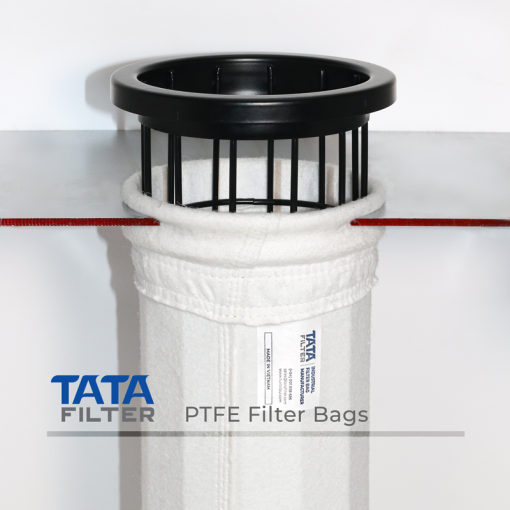


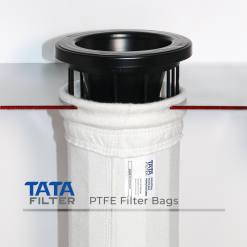
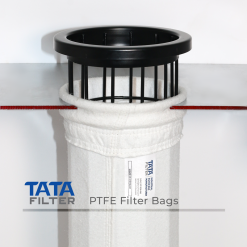

PTFE heat resistant filter bag are manufactured and supplied by Tan Thanh in the Vietnamese market, using high-quality PTFE filter materials from the world’s leading brands such as Gutsche and AOG. The success of this filter bag solution has been proven through its widespread application in waste incineration plants worldwide, and is now expanding in the chemical, cement, and thermal power industries…
1. PTFE Heat-Resistant Filter Material
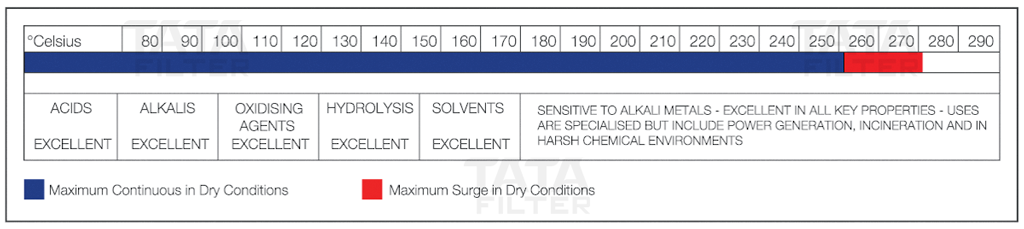
PTFE is rated “Ultratech” by AOG, because it is “ultimately” used for harsh chemical environments at very high working temperatures (continuously at 240 – 250°C), along with good waterproofing and excellent chemical resistance (resistant to acid and alkali corrosion), PTFE filter material has an optimal combination, high quality superior to PPS, Nomex, P84 fibers.
What is PTFE fiber?
PTFE (Polytetrafluoroethylene) is a polymer synthetic fiber, which with a very dense density produces very fine fibers capable of providing good filtration performance. Because of its very high density, its fiber mass is quite low, to achieve the same fiber mass as in polyester felt 550 g/m², PTFE would need about 850 g/m². A typical PTFE felt sheet has a specific gravity of about 0.65, while polyester is typically 0.30.
PTFE comes in 2 forms, white and brown. White is the pure fiber used (can come into direct contact with food). The brown color of PTFE is produced by recycling and residues of some chemicals produced during the production process.
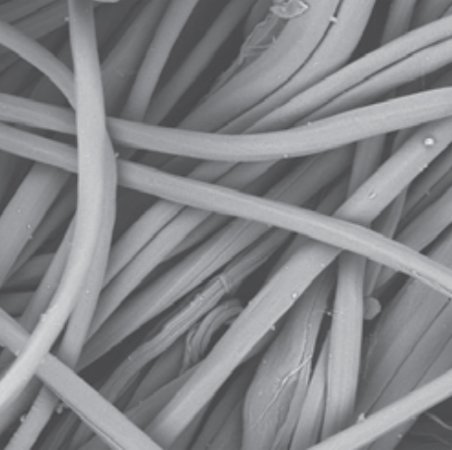
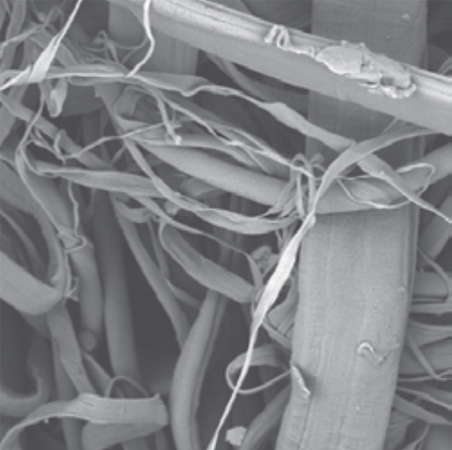
PTFE synthetic fibers are highly waterproof and oil-resistant.
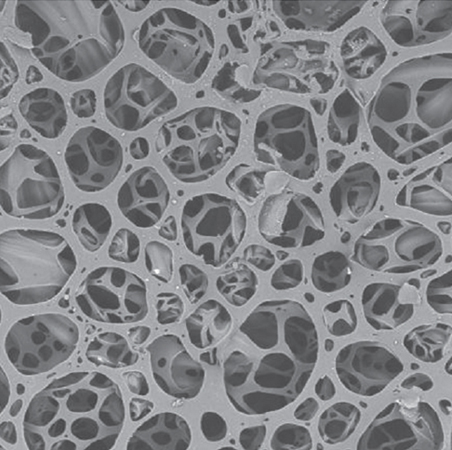

Main characteristics of PTFE heat-resistant filter materials
- Strengths:
- The dust filter bag uses PTFE heat-resistant material that can operate (filter dust) under high continuous temperature conditions (up to 250°C).
- The chemical bond of PTFE material can resist reactive and corrosive chemicals, high-density fine fibers have high slipperiness, helping PTFE dust filter bags to be highly resistant to chemicals (excellent), the ability to filter toxic fine dust, reduce friction and prevent dust adhesion best compared to other types of heat-resistant dust filter bags. (See Gutsche’s scale of heat and chemical resistance below.)
- PTFE membrane compounds: Due to its non-stick and water-resistant properties, high tensile strength and thermal stability, PTFE is produced as an expanded PTFE membrane with a fine fiber structure that is stretched to create micro-pores, used to coat other materials or placed between layers to create a filter fabric that is water-repellent while allowing water vapor/gas to pass through (breathable). The e-PTFE fiber membrane is further subjected to a thermo-mechanical expansion process that produces different microporous structures, depending on the patented technology. It can consist of long narrow fibers intersecting at nodes, or have a uniform expansion with more spherically symmetrical pores and more intersections between fibers.
- Disadvantages:
The cost of manufacturing PTFE filter material is very expensive. Compared to other high-temperature filter materials, PTFE is the highest-grade material used to handle the most “difficult” dust in harsh operating conditions – both high-temperature resistant and chemical resistant – helping to ensure the lowest dust emission. Moreover, the high price is also because high-grade PTFE material has a very high purity and is a safe material suitable for the requirements of dust recovery and air filtration in food processing applications, pharmaceutical production, chemicals, boiler dust filtration, toxic polluting dust, etc.
In terms of feel, the weight of PTFE fabric is quite “heavy”, the weak fiber-fiber bond is easy to form wrinkles and break, so when using PTFE heat-resistant dust filter bags, TAN THANH always requires the manufacturing of filter bag cages to have from 14 to more than 20 vertical bars, so that the steel frame can support the bag throughout the entire operation process.
Due to the very fine and dense fiber structure, PTFE bags are suitable for low filtration speeds to increase filtration efficiency. To increase permeability/breathability, additional treatment of the microporous material or combination with other materials as a substrate, creating an e-PTFE layer, or coating the dust-handling contact surface with e-PTFE is required. See the special technologies of Gutsche and AOG below.
PTFE filter materials manufacturers

From the excellent features of PTFE, typical manufacturers such as Gutsche (Germany) and AOG (Japan – India) have researched and developed exclusive technologies to help create different PTFE series, capable of meeting both harsh working conditions as well as Zero Emission emission requirements.
PTFE fibers are inherently very waterproof, do not absorb moisture and can withstand ultraviolet radiation, so surface treatments are rarely applied. However, manufacturers such as Gutsche and AOG still have a number of enhancement treatments available such as: enhanced collection (embedded membrane), increased friction to attract charged dust along with a more durable tensile structure (glass fiber blend, PTFE membrane/coating on woven fiberglass fabric), etc.
Gutsche’s special technologies apply to PTFE filter materials
- Membratex®: The surface now offers a “cake grab” feature which encourages the build up of an homogeneous filter dust cake. This filter cake is essential for the reaction of additives with most harmful flue gas components. Many waste incinerators in the world successfully operate with filter bags with membratex® surface coating, expanding with combustion equipment applications in the chemical industry, and kiln exhaust in the cement industry.
- Optivel®: Proprietary technology with a blend of different polymer fibers, such as PTFE and PI (polyimide) blends, creates a smart needle felt structure with many advantages, improving durability and dust filtration capacity, proven in waste incinerators around the world, with both output emissions and filtration efficiency optimized.
- Antafin®: Highly effective anti-stick treatment for oily and greasy dirt. Resistance to acids, hydrolysis and other chemicals is increased and cleaning performance is improved at the same time. Excellent results in areas such as combustion processes, chemical industry, food and metallurgy. Antafin can also be used to enhance the anti-stick properties of other specialized treatments such as membratex. In addition, Antafin improves mechanical stability and cleaning very well, cost-effectively through long life and pressure drop.
- Microvel®: Microfiber needle felt structure, special shape fiber, the main advantages are low residual pressure drop, long cycle times, low emissions and very good separation efficiency of fine dust (PM 2.5). Wide application, including wood industry, drying, milling, cement, metallurgy, high temperature furnace.
- Condutex®: Antistatic needle felt, with a feasible conductivity according to DIN 54345 and ATEX 137 compliance, is important when used in applications where a permanent antistatic filter media is required. Condutex technology can be combined with other performance technologies such as Createx, Microvel or Optivel.
AOG’s special technologies apply to PTFE filter materials
- Ultratech™: The optimum combination of chemical and thermal properties with a maximum continuous temperature rating of 250°C is usually not limited by gaseous chemicals.
- Twintech™/Duotech™: Expand microporous ePTFE membrane technology is laminated on a basic textile substrate. This PTFE film can help retain ultrafine dust particles on the surface but still ensure air permeability through microporous structures, increase the ability to separate dust from the surface, and improve filtration efficiency, besides the ability to protect filter materials from environmental chemicals.
- Staticguard™/Checkstatic™: Integrate conductive fibers into filter materials to reduce the possibility of static accumulation with the company’s Checkstatic™ conductive fiber technology.
- Glassbond™/ Glasstech™: As a branch of Duotech‘s ePTFE laminated product line, Glasstech products often use impregnated woven glass fabrics as supports for ePTFE membrane. In these systems, filtration is carried out by a membrane mechanically supported by a woven fiberglass substrate.
Quality testing organizations, setting standards for filter materials:

There are many organizations that can test the quality of PTFE filter material, the leading ones are:
- ISO – The International Organization for Standardization
- DIN – Deutsches Institut für Normung
- VDI – Verein Deutscher Ingenieure
- FDA – Food and Drug Administration
PTFE nonwoven fiber filter materials are manufactured according to the standards of density, weight, thickness, tension, tensile strength, heat resistance, air permeability, shrinkage, resistance to chemical effects (acids, alkalis, oxidation, hydrolysis,…). The quality of PTFE filter materials is practically verified in its laboratories as well as independent tests from the most prestigious standards organizations in the world.
“PTFE membrane filters are among the most efficient industrial air filters. PTFE-coated filters are often used in dust collection systems to collect particulate matter from air streams in applications involving high temperatures and high particulate loads such as coal-fired power plants, cement production and steel foundries.” (See wikipedia.org, PTFE membrane filters, PTFE-coated filters)
2. Tan Thanh’s PTFE Filter Bag
Tan Thanh’s production capacity of PTFE heat-resistant dust filter bags
With more than 14 years of experience in manufacturing and processing different types of PTFE dust filter bags, Tan Thanh staff are carefully trained by experts of Gutsche and AOG, understand the techniques, and produce high-quality PTFE bags, suitable and meet the strict requirements for each customer.
With modern and automatic machinery lines, ISO 9001–2015 quality management system, Tan Thanh self-produces PTFE filter bags with high quality and uniformity, replacing imported goods to help businesses reduce investment costs, meet dust emission reduction targets, and environmental protection.
Structure of PTFE filter bag manufactured by Tan Thanh
Tan Thanh will process according to the size and structure requirements of customers. Before processing, technicians will survey, measure and take samples, and ensure that the filter bag after installation must fit properly, and not leak dust out.
- Bag body: Depending on the requirements, the entire seam can be coated, to prevent fine dust from passing through and increase the service life of the bag.
- Bag top: The most common is the mouth of the bag made from an elastic steel ring – stainless steel (SUS 304).
- Bag bottom: Double-layer reinforced both bag leg and bag bottom.
- Sewing thread: 100% high strength PTFE.
- Bag size: Common diameter D135 – 165 (mm), length from 1,000 – 7,000 (mm).

Material specification of PTFE heat-resistant dust filter bag, manufactured by Tan Thanh

Reference sources
- GUTSCHE: Technical Data 2009. GUTSCHE porotex® Product Programme. Product Information Sheet: microvel®PL. Type: PL075LP10X2M410, Jan 2022, Alkegen).
Website: Product Range – Lydall Gutsche GmbH & Co. KG (lydall-gutsche.com) - AOG: Arvind & OG Brochure, Adrew Product Brochure. Advanced Material Division (product specification). Product Information for FZZ0750FF-BAFM. Certificate of Analysis (COA 2017).
Website: ARVIND OG NONWOVENS PVT. LTD. | OG Corporation - SGS: Test Report Dec 20, 2021.
PTFE filter bag application manufactured by Tan Thanh
PTFE filter bag is always the most optimal material in filter materials, it is used to treat the most “annoying” emissions such as: Coal-fired boiler, Waste incinerators, Carbon black production, Titanium dioxide (TiO2) Production, Power Plant, etc.
Tan Thanh (transfered form Dat Tin) has a lot of experience in consulting and has applied PTFE dust filter bags for multi-fuel boilers, waste incinerators, drying ovens, and thermal power in Vietnam. Up to now, PTFE filter bags manufactured by Tan Thanh have been trusted by many customers to replace imported PTFE filter bags, not only meeting highly strict dust filter standards but also long-term use and easy maintenance and replacement as needed.
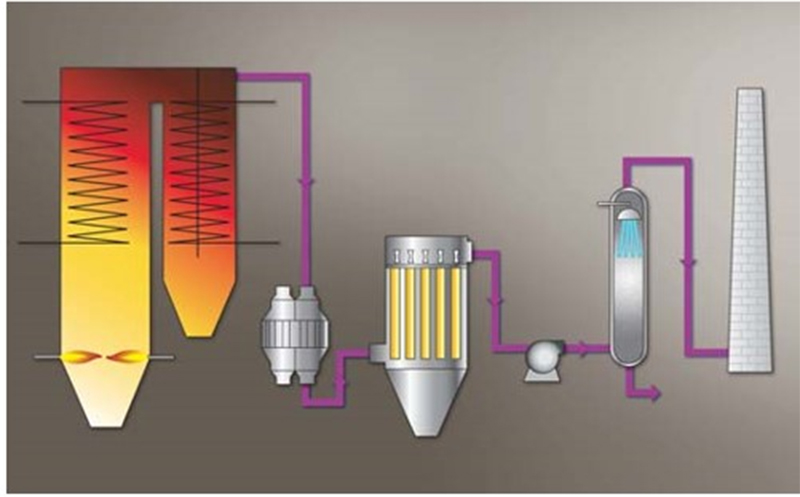
Customers use Tan Thanh PTFE dust filter bags

Typical customers use GUTSCHE PTFE Filter Bags
GUTSCHE is renowned worldwide for its pioneering, proprietary technologies for the production of high-quality filter materials, and intelligent, superior filter material structures. With the ability to research and produce PTFE material lines combining many advantages of other material lines, the company is always the first choice for large boilers, furnaces, and thermal power systems worldwide.

Reference: Gutsche PTFE dust filter bags at a pulp factory in Biocell Pascov, Czech Republic.
See also
TECHNICAL SUPPORT
NEWS
CASE STUDIES