
Electrostatic Precipitator System
The Electrostatic Precipitator (ESP) system is an advanced technology in air pollution control. By harnessing the power of electrostatic force, ESP can effectively capture particulate matter (PM), ensuring cleaner exhaust gases and compliance with environmental regulations.
Operating Principle
An electrostatic precipitator is a filter capable of removing small dust particles from an air stream as it passes through the electrostatic chamber. It operates on the principle of ionization and separation of dust from the air as it passes through a high-voltage electric field area.
The electrostatic precipitation system consists of two sets of electrodes: positive and negative. The negative electrodes are typically wire meshes, while the positive electrodes are plates. These electrodes are placed vertically and arranged alternately.
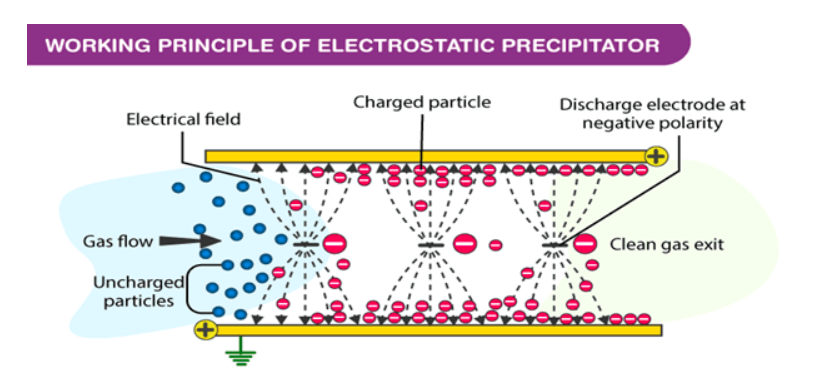
The negative terminal of a high-voltage DC power source is used to connect the negative electrodes, while the positive terminal is connected to the positive plates. To ionize the environment between the electrodes, a specific distance is maintained, and the high-voltage DC power source creates a high voltage gradient.
Air acts as the medium between the two electrodes. Arc discharge may occur around the electrode rods or wire mesh.
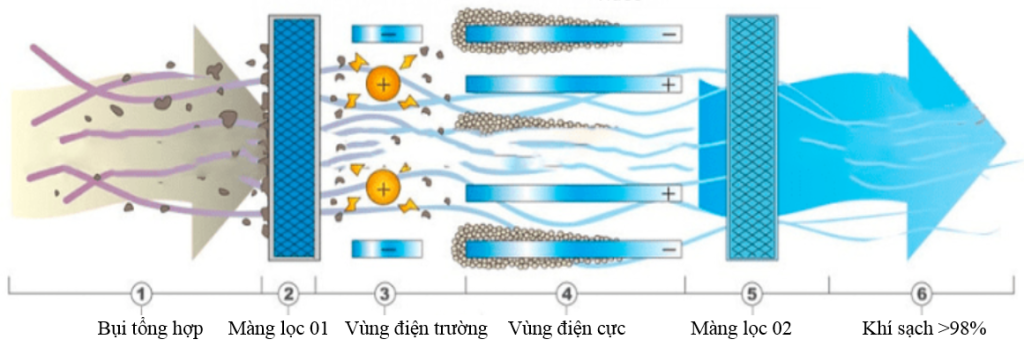
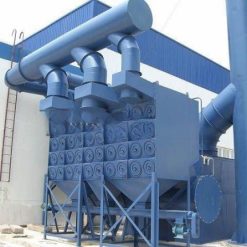
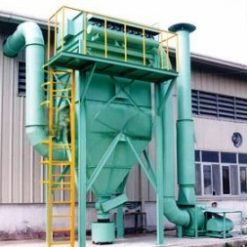
The entire system is enclosed in a metal housing frame with an inlet for exhaust gas and an outlet for filtered air. When the electrodes are ionized, numerous free electrons are generated, interacting with dust particles in the gas, causing them to become negatively charged. These particles move toward the positive electrodes and fall off due to gravity. The clean exhaust stream (free of dust particles) moves through the ESP and is released into the environment through the chimney.
System Structure
The electrostatic precipitator system is composed of the following main components:
- Suction fan: Designed by TATA FILTER according to specific standards, featuring high efficiency, multiple motor options, diverse models, and complete control over fan technical parameters during production.
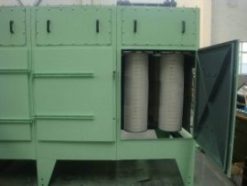
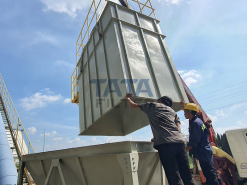
- Casing: Rectangular housing welded from steel to form the dust settling chamber. The ESP casing includes an inlet for dust-laden gas and an outlet for clean air. The exterior is wrapped with an insulation layer.
- Electrodes: Consist of two distinct types of plates. The positive plate is a flat metal sheet to increase the dust contact area. The negative electrode consists of barbed steel wires designed to concentrate electric charge. These opposite electrodes are arranged alternately.
- Rapping mechanism: Operates like a hammer mounted on a shaft, connected to a motor on top of the filter.
- PLC Control System: Typically installed in the control room to manage all parameters of the ESP system and monitor operations via computer screens. All data is connected and transmitted to the plant’s central control unit.
- In addition to the main components, the top of the filter is equipped with a screen mesh to distribute air and dust evenly upon entry.
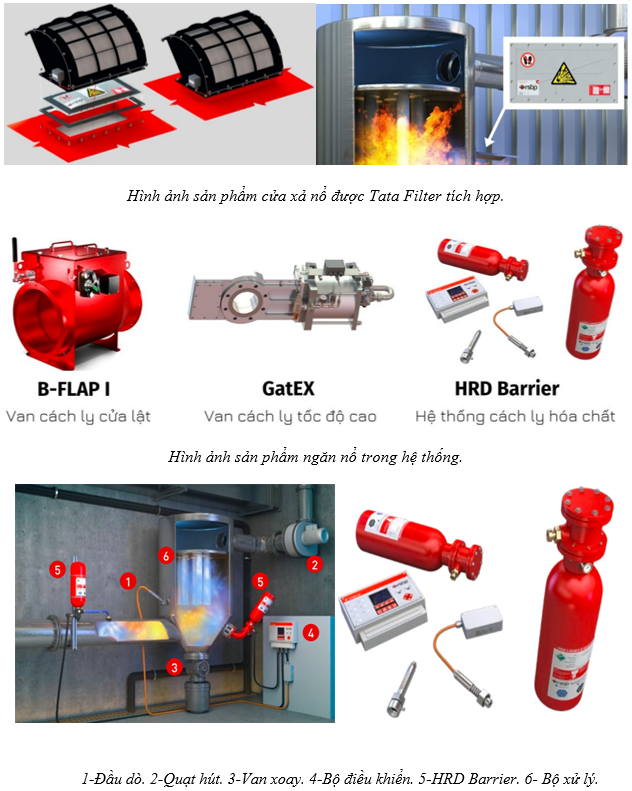
Furthermore, the equipment is equipped with high-tech explosion-proof products to ensure safer operation in environments prone to fire or explosion risks.
Technical Specifications
* For each project requirement, TATA FILTRATION calculates and designs ESP units tailored to the project, ensuring treatment efficiency and compliance with the standards and regulations of the Ministry of Natural Resources and Environment.
* Basic technical specifications designed by TATA FILTRATION:
– Filter chamber volume: 50m³ – 500m³.
– Power capacity: 10 – 25 KVA.
– Chamber voltage: 50 KV – 100 KV.
– Chamber current: 50 – 500 mA.
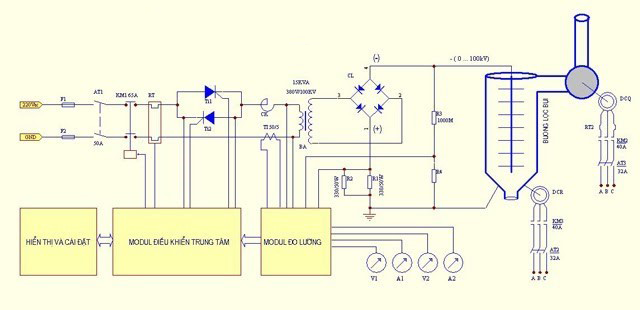
– Voltage boosting method: Primary transformer control.
– Voltage regulation component: Thyristor.
– Control mode: Automatic or manual.
– Current stability and chamber insulation monitoring.
– Automatic management and adjustment of discharge frequency to minimize sparking.
– Central control using digital microchips.
– Parameter setup via LCD screen.
– Display of voltage, current, and power.
– Automatic rapping, with cycles adjusted based on dust volume.
– Overload and chamber discharge warning and protection.
Applications
Used for dust recovery and filtration in industrial production sectors such as: iron, steel, cement, mineral processing, wood processing, smelting, plating, and electrolysis.
Contact Tan Thanh
- Consulting and designing dust treatment and material recovery systems in industrial factories, surveying dust emission points and proposing solutions, and calculating optimal airflow and capacity for recovery systems.
- Designing and constructing complete baghouse systems, installed in modules to ensure plant operational connectivity.
- Designing, constructing, renovating, and replacing suction hood systems, piping, exhaust fans, and flue pipes.
- Equipment solutions: filter bags, pulse valves, control boards, air tanks, piping, fan systems, suction hoods, pressure gauges, vibrators, fire/explosion protection devices, rotary valves, etc.
- Consulting on filter materials, manufacturing filter bags and cages to replace imports; maintenance planning for each factory.
With the motto: “Technically correct, Competitive, On-schedule, Professional service”, we strive to achieve long-term satisfaction and trust from our Customers.
Consulting Hotline: 0901 858 686
Nguyen Phuoc Thuan. Phone: 0917 531 007. Email: kelvin@tatafilter.com
Pham Thanh Binh. Phone: 0919 823 239. Email: thanhbinh@tatafilter.com
Note: Please contact our hotline for customized advice. Any reproduction of content or images requires written consent from Tan Thanh Industrial Filter Company.
References
TECHNICAL SUPPORT:
Comparing the efficiency of Electrostatic Precipitators vs. Fabric Bag Filters
NEWS: